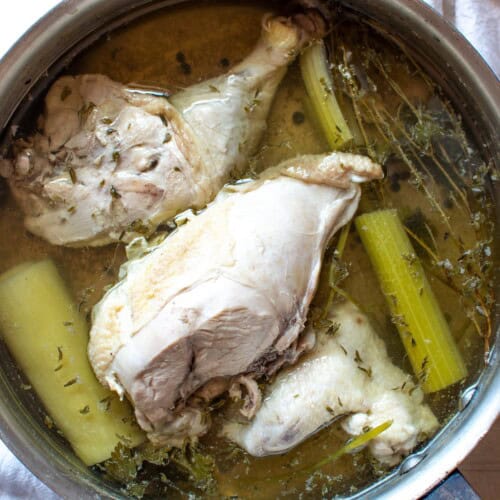
How to Poach Chicken for Perfect Tender Results
Learning how to poach chicken is one of the easiest ways to get tender chicken for salads, sandwiches, soups, casseroles, and meal prep. You also end up with a flavorful poaching liquid that can double as a light chicken stock for another recipe.
Print
Pin
Servings: 4 servings
Ingredients
- 5 sprigs parsley
- 3 sprigs thyme
- 1 stalk celery, cut into thirds
- 1/2 whole chicken or 1 breast, 1 leg, 1 wing, and 1 thigh all with skin and bones
- 1/2 leek, washed thoroughly
- 1/2 cup white wine
- 2 teaspoons kosher salt
- 1/2 teaspoon black peppercorns
Instructions
- Combine the ingredients. Add 5 sprigs parsley, 3 sprigs thyme, 1 celery stalk cut into thirds, 1/2 whole chicken (or 1 breast, 1 leg, 1 wing, and 1 thigh), 1/2 leek, 1/2 cup white wine, 2 teaspoons kosher salt, and 1/2 teaspoon black peppercorns to a large pot. Add enough cold water to cover the chicken by 1 inch.
- Poach the chicken. Place the pot over medium heat and bring to a gentle simmer, then reduce the heat so the liquid is barely moving. If using a mix of white and dark meat, start checking with an instant-read meat thermometer after 45–50 minutes. Remove the breast when it reaches 165°F and the leg, thigh, and wing when they reach about 175°F.
- Rest and strain. Return any chicken pieces you removed early to the pot and let everything cool in the broth for about 30 minutes. Transfer the chicken to a cutting board, remove the skin and bones, then dice, slice, or shred. Strain the broth through a fine-mesh sieve and refrigerate for up to 4 days or freeze for up to 3 months.
Notes
- Aromatics Variation: Swap the leek for half an onion or add 2 smashed garlic cloves and a slice of fresh ginger for a Asian-inspired poaching flavor base.
- Chicken Storage: Keep shredded or diced meat submerged in a few tablespoons of the cooled poaching liquid to prevent it from drying out in the fridge.
- Broth Storage: Reserve the strained poaching broth in an airtight glass jar. It keeps for up to 4 days in the fridge or up to 3 months frozen (great for quick soups or risotto).
- Wine Alternatives: If cooking without alcohol, replace the white wine with 1/2 cup extra water plus a squeeze of fresh lemon juice or 1 teaspoon of apple cider vinegar for bright acidity.