How to Poach Chicken for Juicy, Perfect Results
Learning how to poach chicken is one of the easiest ways to get tender chicken for salads, sandwiches, soups, casseroles, and meal prep. You also end up with a flavorful poaching liquid that can double as a light chicken stock for another recipe.
This post may contain affiliate links. Read our affiliate policy.
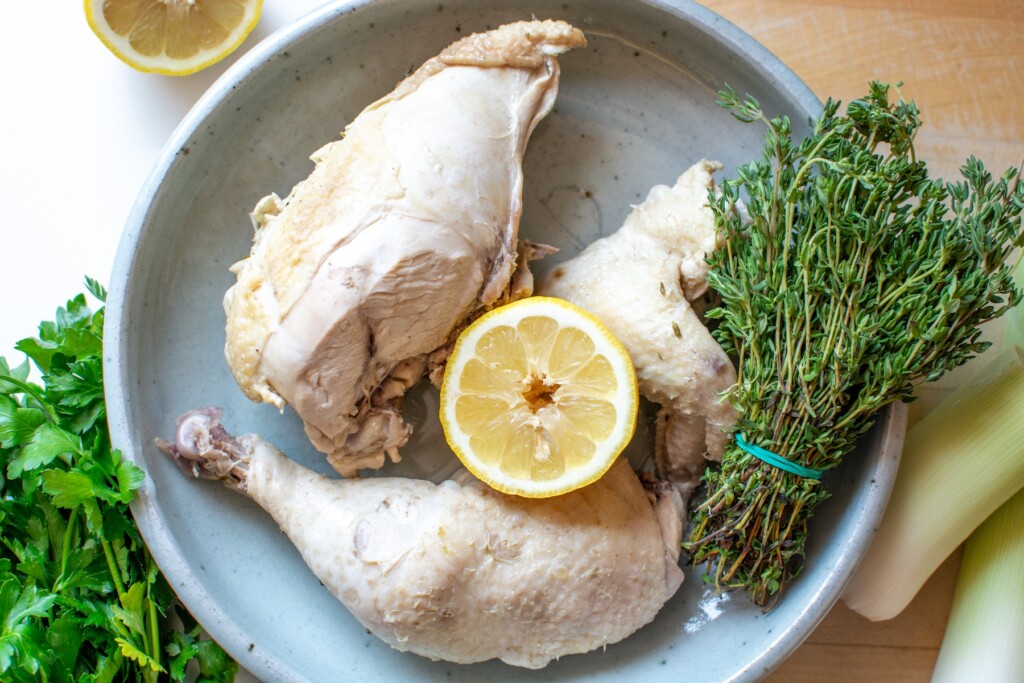
If poaching chicken sounds a bit old-fashioned or uninspiring—or if you’re not even entirely sure what it means—think of it as gentle, foolproof simmering. While it might lack the crispy skin of roasting or the sear of a hot skillet, poaching solves the single biggest problem with chicken: dryness.
By cooking the meat low and slow in a bath of fragrant herbs, aromatics, and a splash of wine, you get absurdly tender, juicy, perfectly cooked chicken every single time with zero effort or active watching.
Plus, it does double duty by creating a rich, flavorful homemade broth in the process—making it the ultimate modern meal-prep secret for salads, tacos, and quick weeknight meals
I especially like poaching chicken with the skin and bones because it gives both the meat and broth more flavor. The key is keeping everything at a low temperature. You want a gentle simmer—not a full boil—so the chicken stays juicy instead of turning tough.
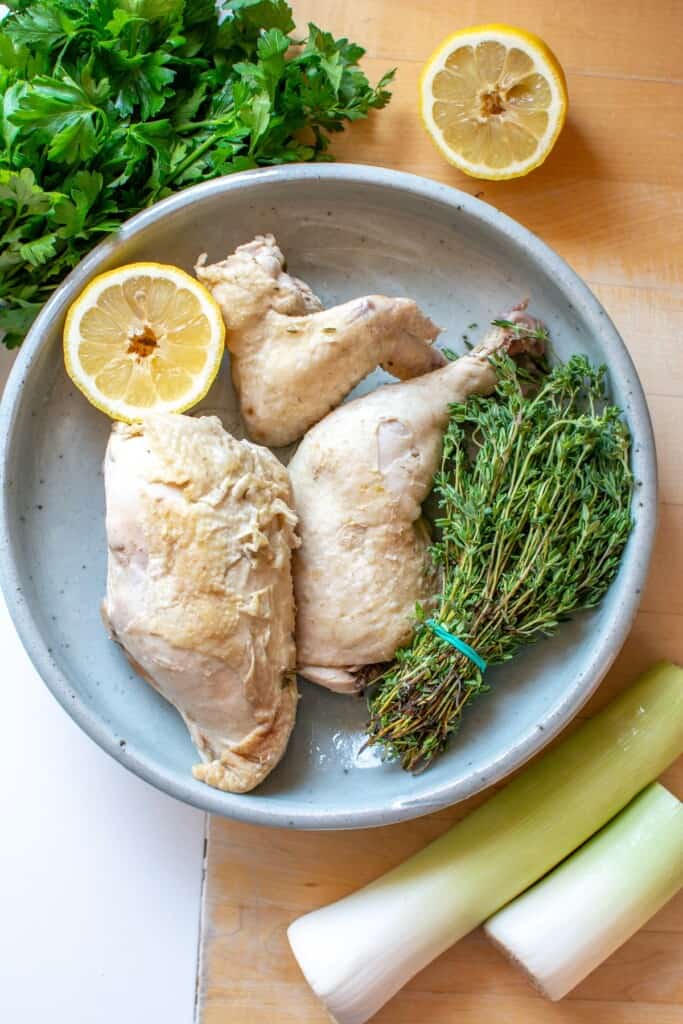
Why Low Heat Matters
Low heat gently cooks the chicken so it stays tender instead of drying out. Bone-in chicken also flavors the broth as it cooks, leaving you with shredded chicken for recipes like my Creamy Shredded Chicken Baked Pasta Casserole plus broth to use later.
What You’ll Need
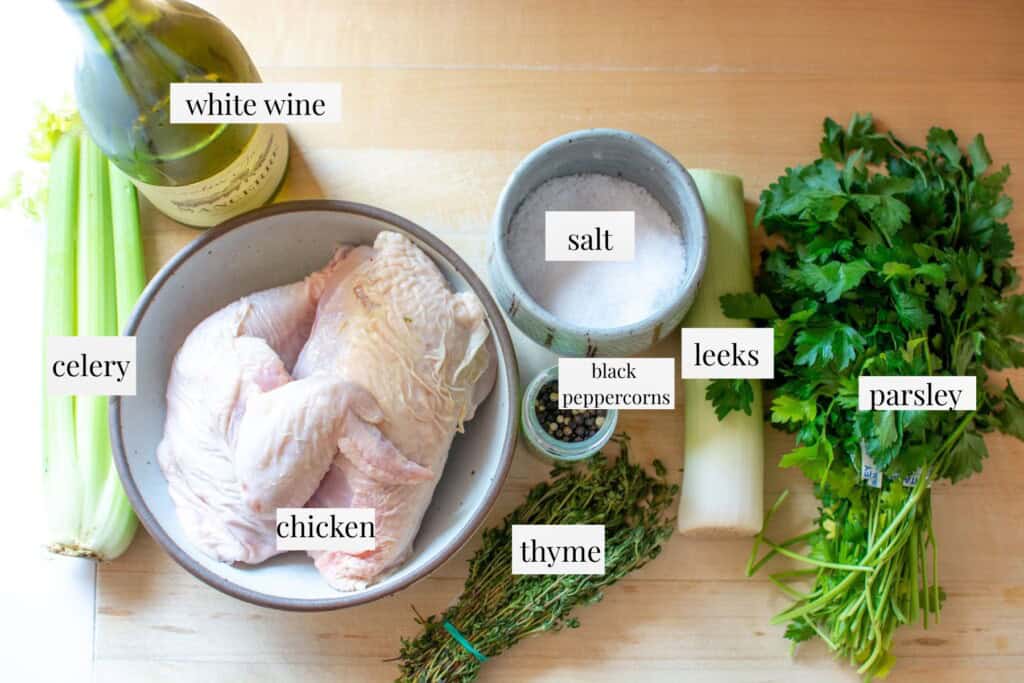
For my poached chicken, I use:
- Chicken: Bone-in, skin-on chicken gives both the meat and broth more flavor; you can use only chicken breasts or thighs, but adjust the cooking time accordingly.
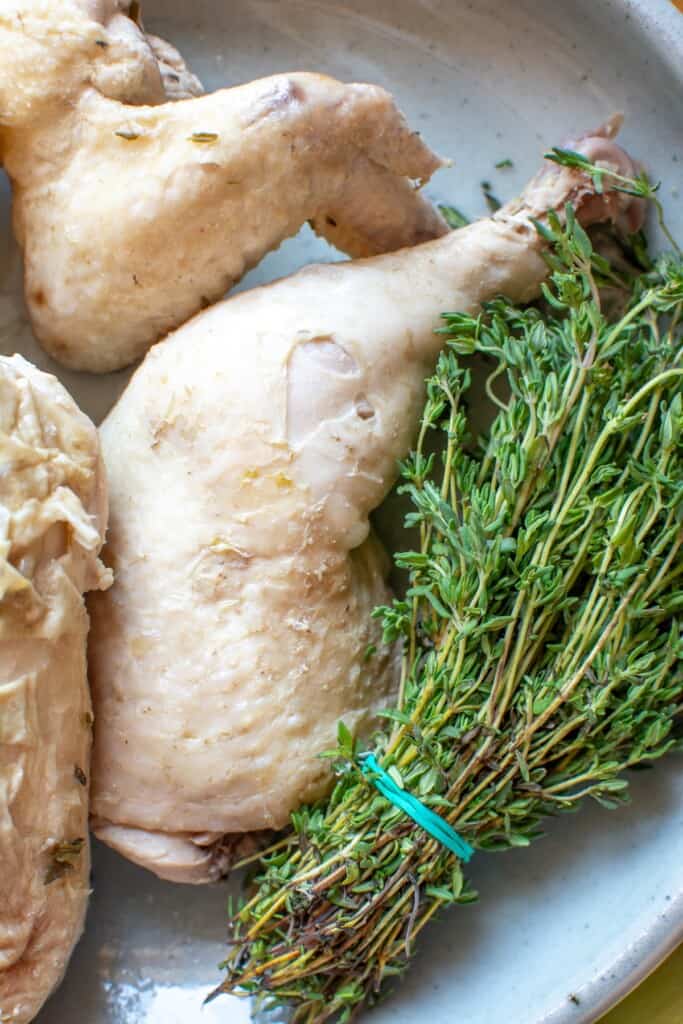
- Parsley and thyme: These fresh herbs add a light savory flavor; find them in the produce section, or swap in a bay leaf and a pinch of dried thyme.
- Celery and leek: These build mild vegetable flavor in the broth; if you don’t have leek, use yellow onion.
- White wine: Dry white wine adds acidity and depth; substitute chicken stock or water with a small squeeze of lemon juice if needed.
- Kosher salt: I use Morton kosher salt.
- Black peppercorns: Whole peppercorns gently season the broth; ground black pepper works if that’s what you have.
- Cold water: Cold water lets the chicken and poaching liquid heat gradually, helping the meat cook gently and stay tender.
How to Poach Chicken
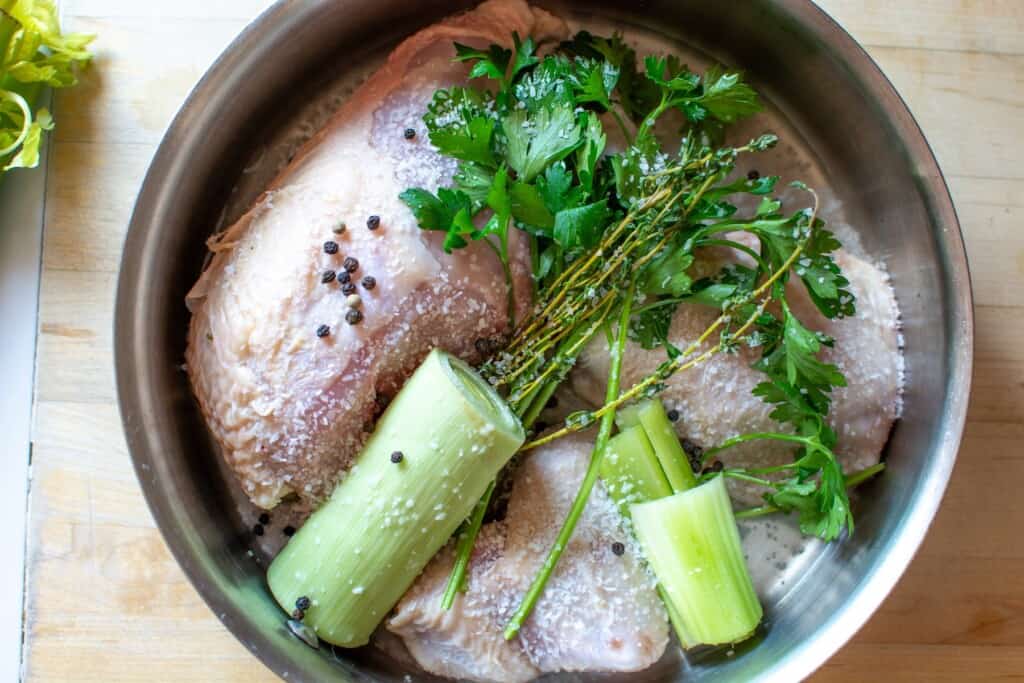
Combine all ingredients in a large pot. Add enough water to cover chicken by 1 inch. Place over medium heat and bring to a gentle simmer. Reduce heat so liquid is barely moving.
If using a mix of dark and white meat, start checking at 45-50 minutes. The breast pieces are ready when an instant-read thermometer reaches 165°F and when the leg/thigh/wing hits 175°F (dark meat is more forgiving and tastes better cooked a bit further).The chicken should be firm but still tender and it’s juices run clear. Remove any pieces as soon as they reach temperature and let remaining pieces continue cooking. If using boneless, skinless chicken breasts, start checking after 10–15 minutes and rely on a meat thermometer rather than the clock.
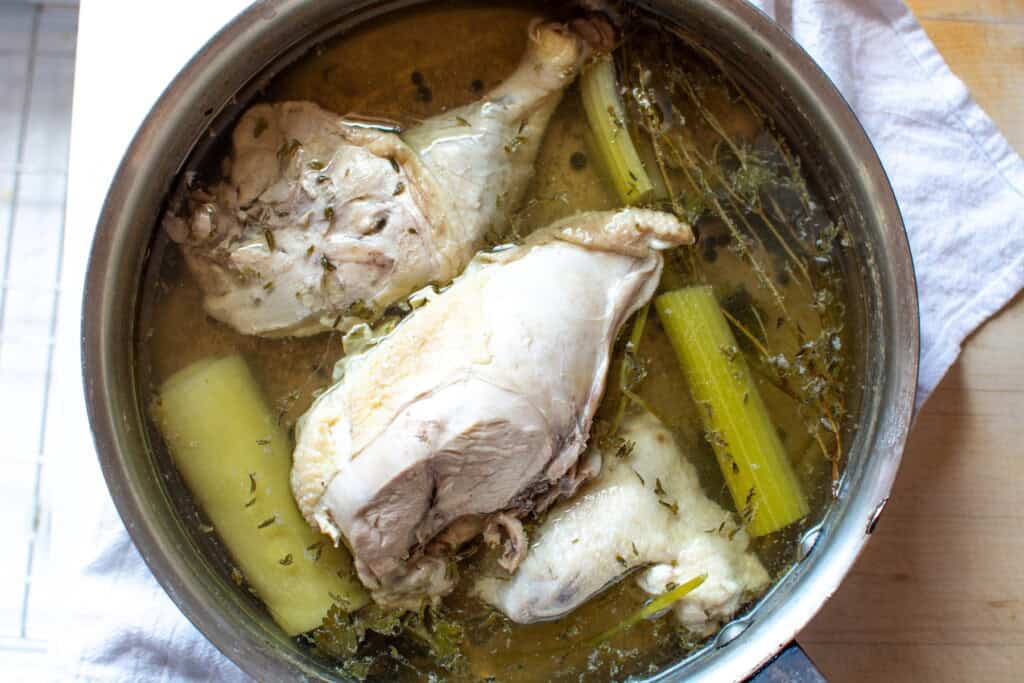
If you have removed any chicken pieces, return them to the pot and let cool for about 30 minutes in the broth, then transfer to a cutting board and remove skin and bones. Dice for a salad or slice for a sandwich. Strain the broth through a fine mesh sieve and reserve for soup. Broth will keep for 7 days in the refrigerator or 3 months in the freezer.
Save the Broth
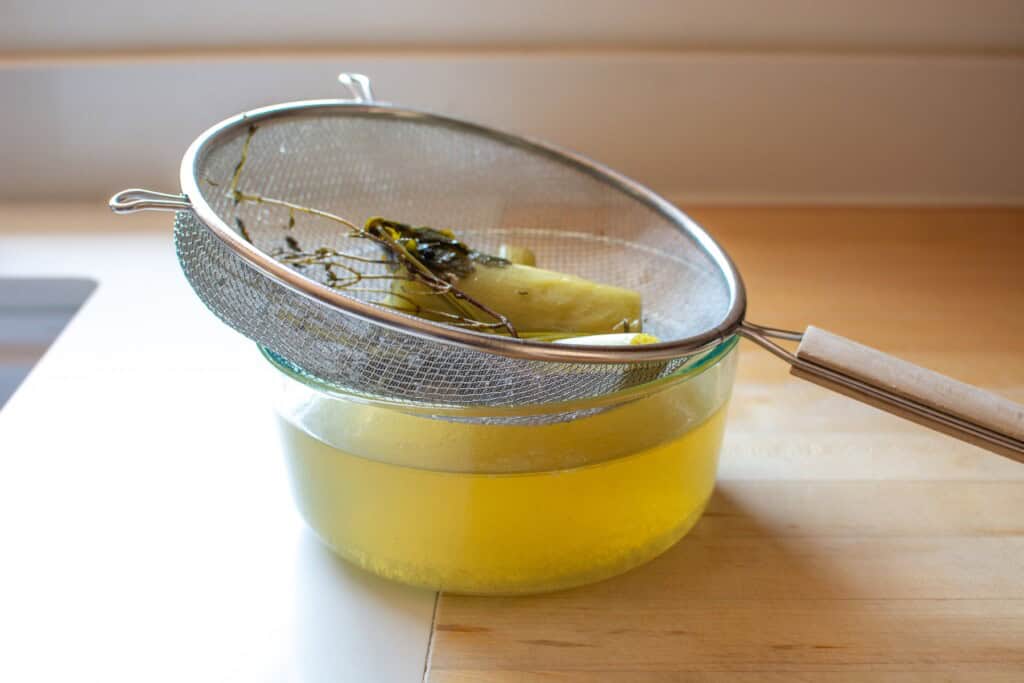
Strain the poaching liquid through a fine-mesh sieve and save it for recipes like my Mushroom Barley Soup, or Italian Lentil Soup.
Store it in an airtight container for up to 7 days in the refrigerator or 3 months in the freezer.
What to Make With Poached Chicken
- Casserole or pot pie: Use shredded chicken anywhere you’d normally use rotisserie chicken like in my Chicken Pot Pie recipe.
- Pasta: Add it to my Penne with Spicy Vodka Sauce for extra protein.
- Chicken salad: Dice it for your favorite chicken salad recipe or my California chicken salad is good too.
- Chicken sandwiches: slice it for chicken sandwiches (from my sister site ¡Hola! Jalapeño) or tuck it into Jicama wraps.
- Tacos and enchiladas: Use shredded chicken in Chicken Tinga Tacos and Chicken enchiladas (again, from my sister site ¡Hola! Jalapeño)
- Soups: Add it to soups or stews like my chicken and sausage gumbo.
- Sauces and dressings: Slice the poached chicken and drizzle with Italian salsa verde, pesto, or my favorite green goddess ranch.
Using Bone-In vs. Boneless Chicken
Bone-in, skin-on chicken is best for this recipe because it stays tender and adds more flavor to the poaching liquid. Boneless, skinless chicken breasts also work, but they cook much faster, so start checking the internal temperature early to prevent them from drying out.
FAQs
How long does it take to poach chicken?
Bone-in chicken takes about 45 to 60 minutes at a gentle simmer, while boneless chicken breasts cook much faster.
What temperature should poached chicken reach?
Use a meat thermometer to check the internal temperature; chicken breasts should reach 165°F, while dark meat is especially tender around 175°F.
Can I poach frozen chicken?
For the most even cooking, thaw the chicken first before adding it to the poaching liquid.
Can I make poached chicken ahead of time?
Yes, store the cooked chicken in an airtight container in the refrigerator for up to 4 days.
Why is my poached chicken tough?
The poaching liquid may have gotten too hot; keep it at a very gentle simmer and avoid a full boil.
How to Poach Chicken for Perfect Tender Results
Ingredients
- 5 sprigs parsley
- 3 sprigs thyme
- 1 stalk celery, cut into thirds
- 1/2 whole chicken or 1 breast, 1 leg, 1 wing, and 1 thigh all with skin and bones
- 1/2 leek, washed thoroughly
- 1/2 cup white wine
- 2 teaspoons kosher salt
- 1/2 teaspoon black peppercorns
Instructions
- Combine the ingredients. Add 5 sprigs parsley, 3 sprigs thyme, 1 celery stalk cut into thirds, 1/2 whole chicken (or 1 breast, 1 leg, 1 wing, and 1 thigh), 1/2 leek, 1/2 cup white wine, 2 teaspoons kosher salt, and 1/2 teaspoon black peppercorns to a large pot. Add enough cold water to cover the chicken by 1 inch.
- Poach the chicken. Place the pot over medium heat and bring to a gentle simmer, then reduce the heat so the liquid is barely moving. If using a mix of white and dark meat, start checking with an instant-read meat thermometer after 45–50 minutes. Remove the breast when it reaches 165°F and the leg, thigh, and wing when they reach about 175°F.
- Rest and strain. Return any chicken pieces you removed early to the pot and let everything cool in the broth for about 30 minutes. Transfer the chicken to a cutting board, remove the skin and bones, then dice, slice, or shred. Strain the broth through a fine-mesh sieve and refrigerate for up to 4 days or freeze for up to 3 months.
Notes
- Aromatics Variation: Swap the leek for half an onion or add 2 smashed garlic cloves and a slice of fresh ginger for a Asian-inspired poaching flavor base.
- Chicken Storage: Keep shredded or diced meat submerged in a few tablespoons of the cooled poaching liquid to prevent it from drying out in the fridge.
- Broth Storage: Reserve the strained poaching broth in an airtight glass jar. It keeps for up to 4 days in the fridge or up to 3 months frozen (great for quick soups or risotto).
- Wine Alternatives: If cooking without alcohol, replace the white wine with 1/2 cup extra water plus a squeeze of fresh lemon juice or 1 teaspoon of apple cider vinegar for bright acidity.