
Vegetarian Pesto Pasta with Spring Vegetables Recipe
A fresh and vibrant pesto pasta with vegetables featuring shaved asparagus, artichoke hearts, and a bright, herby basil pesto. This easy recipe is perfect for a quick, flavor-packed weeknight meal and can be easily made vegan.
This post may contain affiliate links. Read our affiliate policy.
Post last updated March 23, 2026.
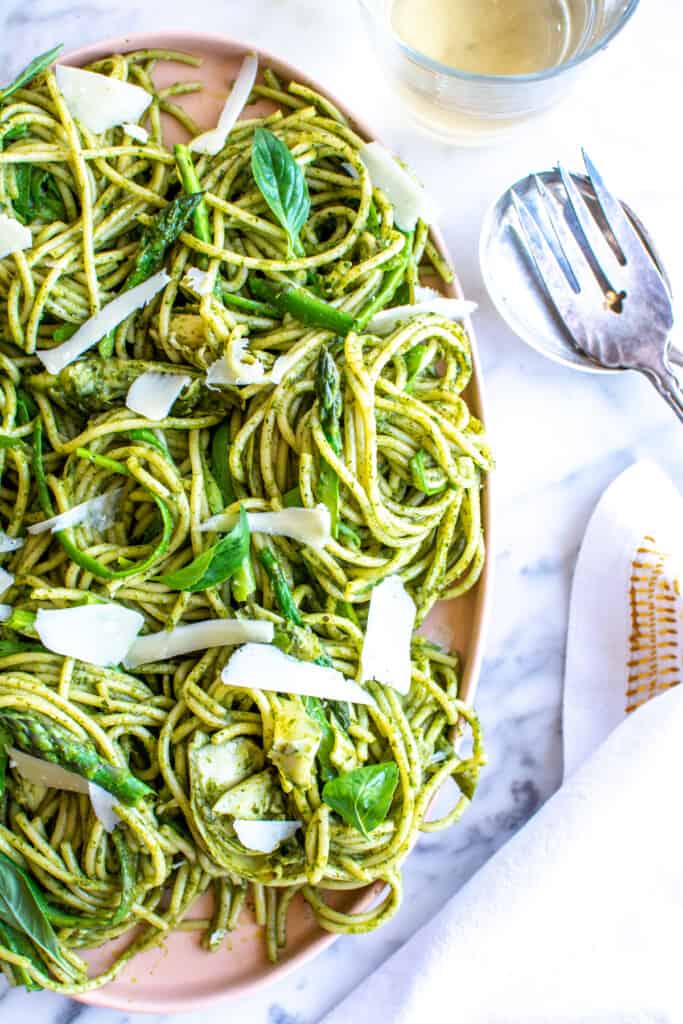
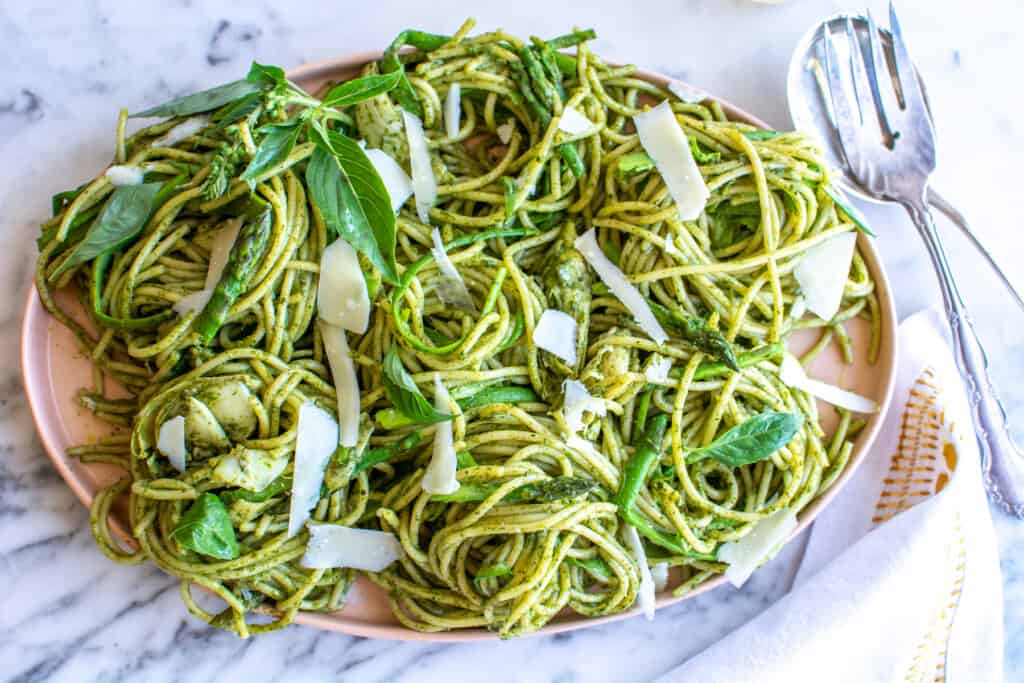
I think this is my favorite color of green. I mean, I think this green is my favorite color. I’m picking out tile for my kitchen renovation and I plan on taking this image with me and showing the salesperson at the tile store to see if they have something that will match.
Doesn’t it just make you feel a calm kind of joy? It gives a sense like the harshness of winter is almost over and something brighter, greener, softer is ahead. Spring is good like that, a chance for Mother Earth to exhale and a perfect time to devour sweet spring veggies like peas, artichokes, and asparagus.
Spring is good like that—a chance for Mother Earth to exhale and a perfect time to enjoy fresh vegetables like peas, artichokes, asparagus, and other summer vegetables.
This vegetarian pesto pasta is one of those formula meals I come back to again and again—just grab your pasta of choice, a bunch of fresh veggies, and your favorite fresh pesto (or make your own pesto at home). It’s truly one of the best ways to turn simple ingredients into something special.
How To Pair Wine With Asparagus and Artichokes?
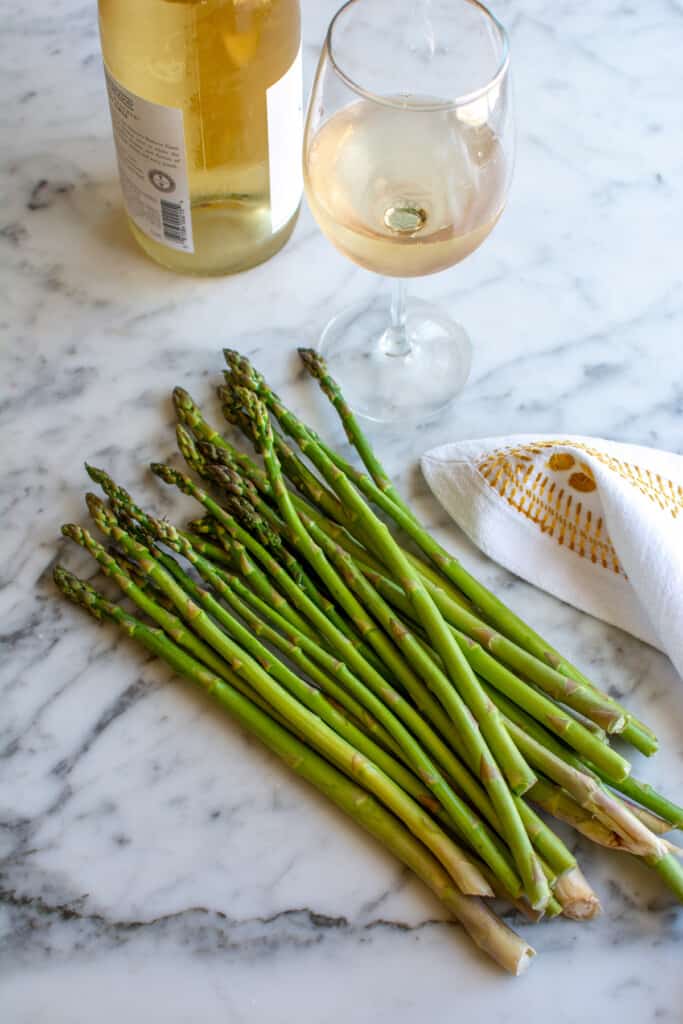
I intentionally chose to use asparagus and artichokes in this pesto pasta with vegetables to dispel some myths about wine and these fresh vegetables not mixing.
It is true that not every wine is friends with asparagus and artichokes—in fact, they have quite a few enemies—but you really only need one or two good friends, right? For asparagus and artichokes, those wine pals are Sauvignon Blanc and Pinto Gris/Grigio. Some people also say Riesling, but that can be tricky depending on if it is dry or sweet.
The problem with these two vegetables is they can make wine taste metallic and harsh, which is why this dish works so well—the fresh basil pesto, fresh herbs, and a touch of lemon juice create a citrusy, herbal balance that complements both the wine and the pesto veggie pasta beautifully.
There are several excellent Sav Blanc and Pinot Gris options from certified sustainable California wineries, and they pair perfectly with this delicious pesto pasta. Supporting them means you are also supporting sustainability efforts, making this meal a great way to enjoy flavorful pasta dishes while being mindful of the planet.
What You’ll Need To Make The Asparagus Pasta
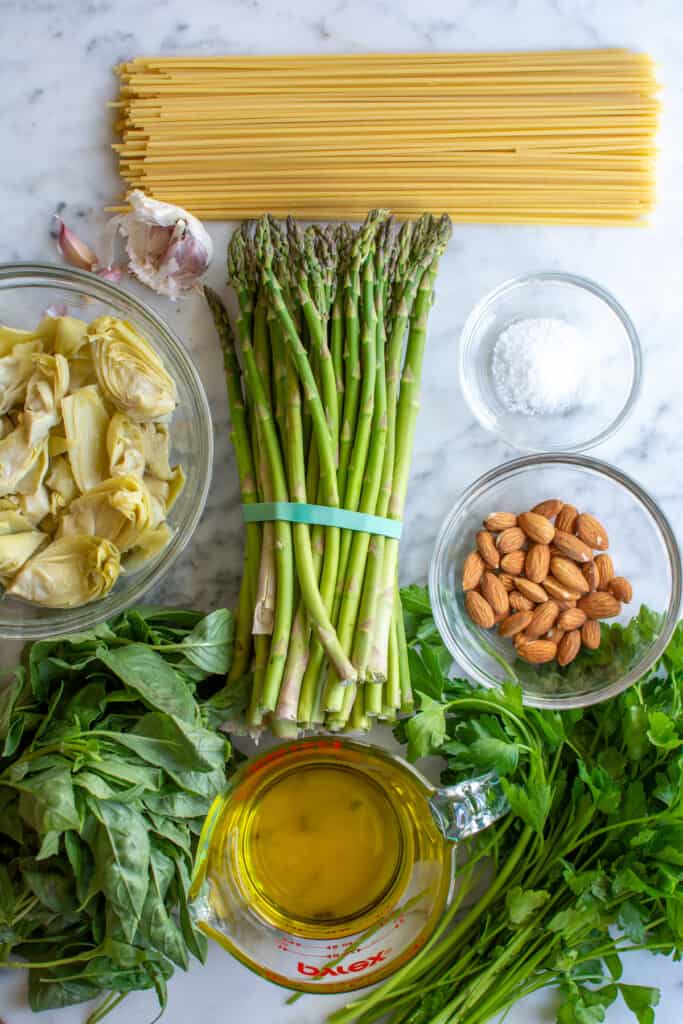
- Extra virgin olive oil
- Whole almonds or an equal amount of pine nuts
- Garlic cloves
- Kosher salt
- Fresh basil for the homemade pesto sauce
- Fresh Italian parsley
- Asparagus
- Spaghetti or linguine
- Canned artichoke hearts
- Parmesan for serving, optional
How To Make It (Step-by-Step Instructions)
step one
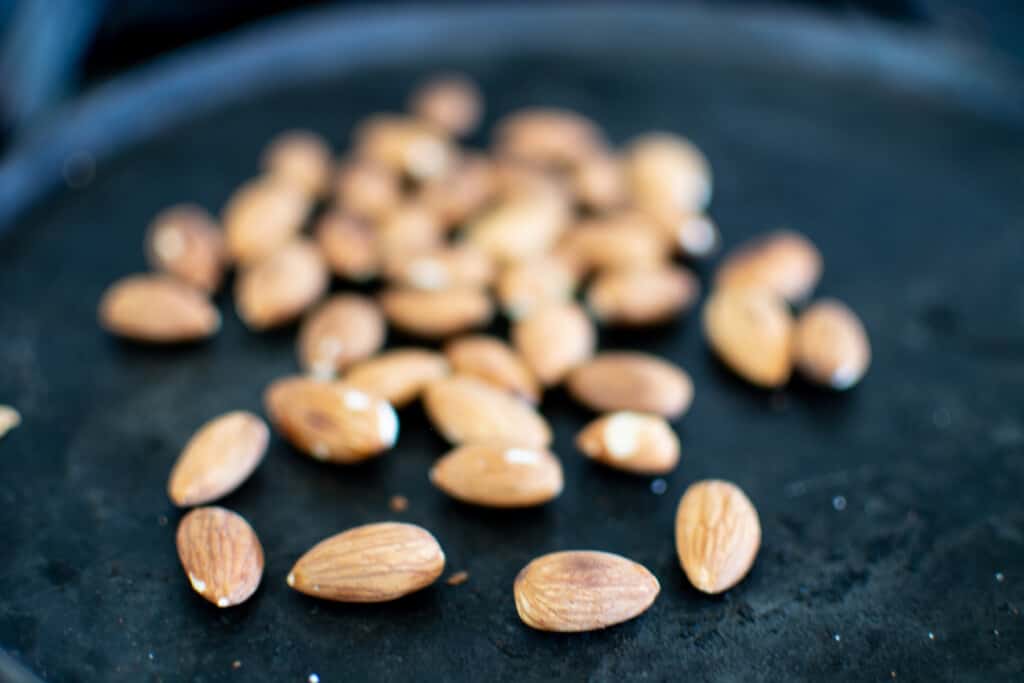
Toast the almonds in a large skillet over medium heat until fragrant and slightly darker in color. Toss them frequently so they don’t burn. Remove to a bowl and let cool.
step two
Combine the oil, toasted almonds, garlic, and salt in the bowl of a food processor or high-powered blender (like a Vitamix). Blend on high until the mixture is smooth with only little pieces of nuts.
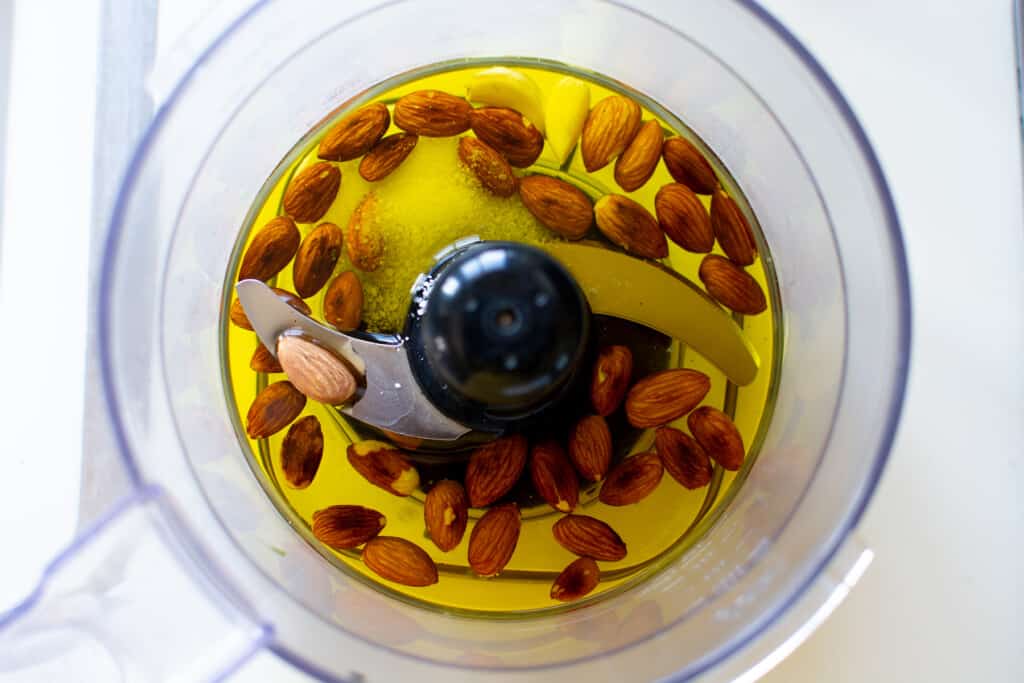
step three
Add the basil and parsley and blend again until smooth, about a minute. Transfer to a bowl and stir in more salt if needed.
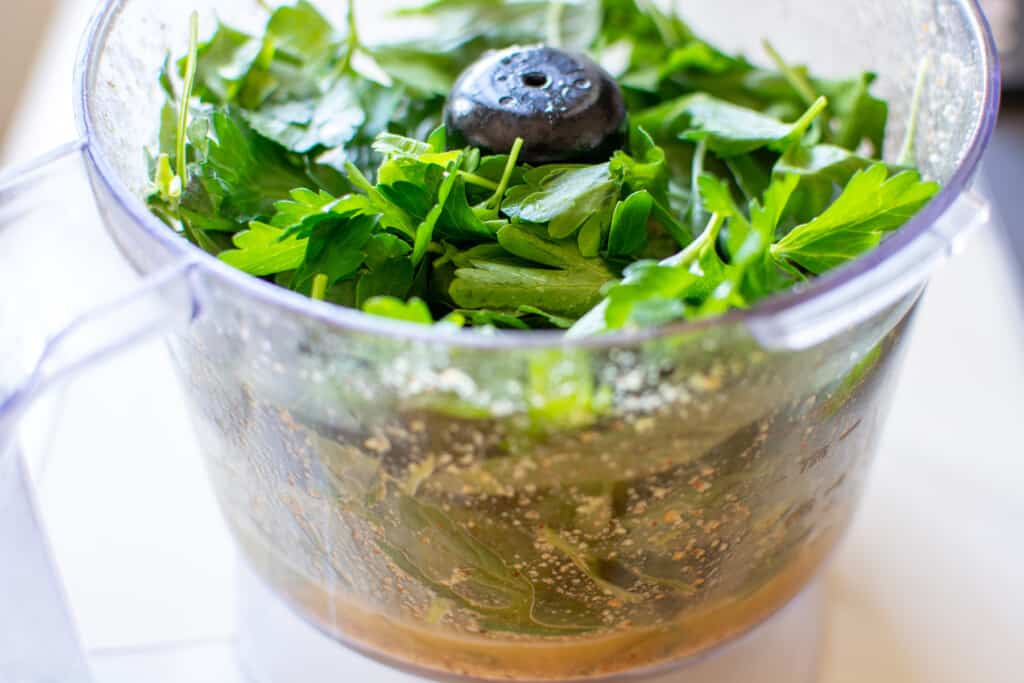
step four
Hold the asparagus by the tip and using a vegetable peeler, peel the asparagus stalks into thin strips. Once you can’t peel any more, snap the tip from the remaining asparagus and put both in the pile with the asparagus shavings.
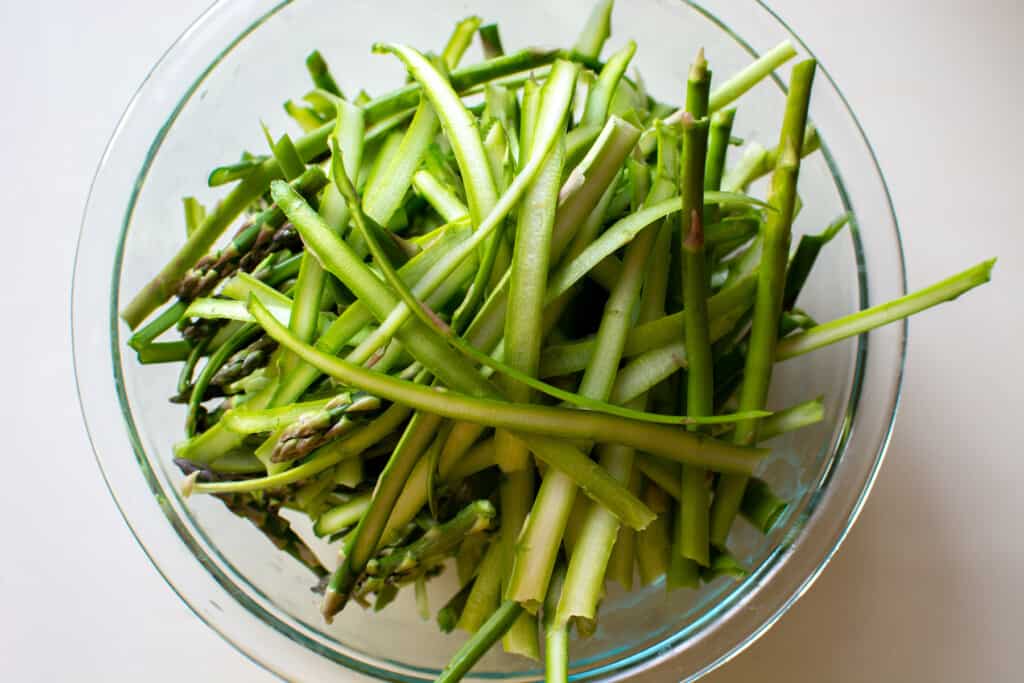
step five
Bring a large pot of salted water to a boil over medium-high heat. Once it is boiling, add the pasta and cook a couple minutes shy of al dente. Add the asparagus and cook a minute more but no longer, you want it to remain crisp tender. Reserve 1 cup of pasta water and drain.
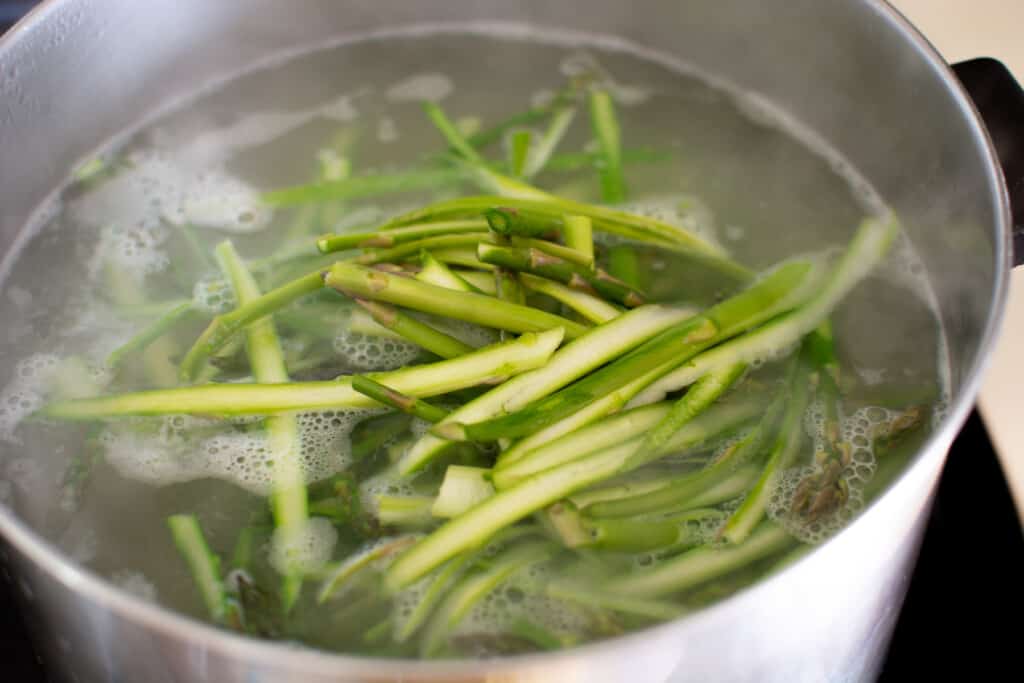
step six
Return the cooked pasta and asparagus to the pot. Add the drained artichokes, pasta water, and pesto and stir with tongs until the past is well coated. If you want to be extra luxurious add a healthy swirl of olive oil or a large pat of softened butter and mix that in before serving.
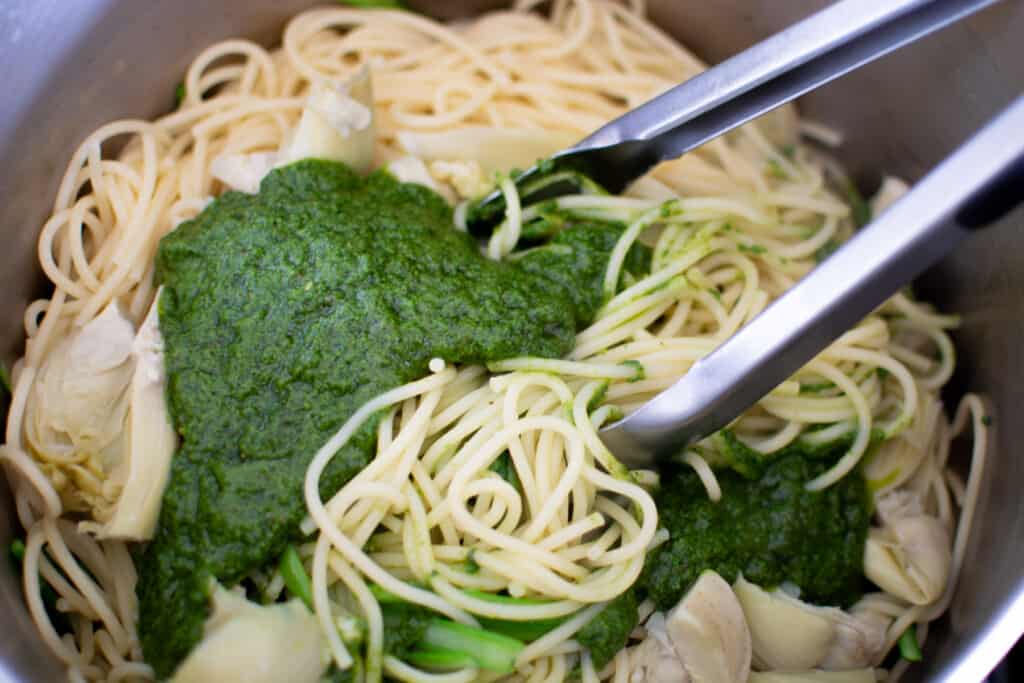
step seven
Serve warm or at room temperature with shaved parmesan cheese, a pinch of red pepper flakes if you like and a drizzle of olive oil. and a chilled glass of Sauvignon Blanc.
Asparagus Pasta FAQ’s
Can I add protein? Add grilled chicken or shrimp or try it with my favorite Lemon-Broiled Cod recipe.
What are some other flavor options? This pasta is super versatile. To make more of a lemon asparagus pasta recipe add a generous teaspoon of lemon zest and a squeeze of fresh lemon juice right before serving or swirl in 1/2 cup of heavy cream with the pesto.
Can I make the pesto ahead? Absolutely! Make the pesto up to 3 days in advance and keep in an airtight container in the fridge.
How do I make this gluten-free? Use gluten-free pasta. I like the Garofalo brand.
More Spring Recipes You’ll Love
- Ginger Hoisin Tofu Stir-Fry
- Vegetable Pot Pie with Herb Drop Biscuits
- The Best Lemon Broiled Cod Recipe
- The Best Vegetable Biryani Recipe
- Super Easy Broccolini
Celebrate Spring!
With this gorgeous pasta bursting with fresh spring flavors. When you try it, let me know how it went! Share a photo and tag me on Instagram using @katesbestrecipes so that I can see (don’t forget to leave a ⭐️⭐️⭐️⭐️⭐️ rating)! Also, sign up for my weekly recipe newsletter so you never miss a thing.
Vegetarian Pesto Pasta with Spring Vegetables
Ingredients
For the Pesto
- 2/3 cup olive oil
- 1/4 cup whole almonds toasted
- 2 cloves garlic crushed
- 1 teaspoon kosher salt
- 2 cups packed fresh basil leaves, about 3 ounces basil leaves
- 1/2 cup packed fresh parsley leaves
For the Pasta
- 1 pound asparagus, tough ends removed
- 1 pound linguine or spaghetti
- 1 14 ounce can quartered artichoke hearts, drained
- Freshly grated Parmesan cheese, for serving (optional)
Instructions
For the pesto:
- Place the 2/3 cup olive oil, 1/4 cup almonds, 2 cloves garlic, and 1 teaspoon salt in the bowl of a food processor fitted with the blade attachment or a high-speed blender and process until finely ground and almost a paste.
- Add 2 cups basil and 1/2 cup parsley and continue blending until really smooth and creamy. Scrape into a bowl and taste. Stir in more salt as needed.
For the pasta:
- Bring a large pot of heavily salted water to a boil over high heat.
- Meanwhile, using a vegetable peeler, shave each asparagus spear lengthwise into thin strips. Once you get to the tip, stop and place that into the pile with the shavings.
- Cook pasta in the boiling water according to package instructions. When pasta only has about a minute left, add asparagus. Cook one minute more, reserve about 1 cup of the pasta water, then drain.
- Return pot to stove over low heat. Add pesto, artichoke hearts, pasta-asparagus mixture, and the pasta water. Toss with tongs until pasta is coated in pesto. Season with salt as needed and toss again. Remove from heat and serve with Parmesan if desired.
Notes
- Almond Alternatives: If you don’t have almonds, toasted walnuts, pine nuts, or even shelled sunflower seeds work beautifully in this pesto for that same nutty crunch.
- Keep it Green: To prevent your pesto from turning brown, wait to blend the basil and parsley until the very last second, or add a tiny squeeze of lemon juice to act as a natural preservative. If you are making the pesto in advance you can cover the top with a layer of olive oil before covering and refrigerating to keep it green.
- Vegan Adaptaion: To make this fully vegan, simply skip the Parmesan and stir in a tablespoon of nutritional yeast for that same salty, “cheesy” depth of flavor.
- Shaving asparagus: When peeling the asparagus, don’t worry about shaving the delicate tips—just snap them off and toss them in whole with the ribbons for a nice pop of texture.
In support of this small business, Kate’s Best Recipes earns revenue in a few different ways. Several sponsored posts are published each month like this post sponsored by California Wines. I also earn an affiliate commission on the sales of products I link to— there are a few of those links in this post. I only feature items I genuinely love and personally use on a regular basis. This commission is an arrangement between the retailer and Kate’s Best Recipes (readers never pay more for products). This income allows me to run the site. Thank you for reading!


would love to try it! I have only a non-alcoholic dry riesling. do you think it will pair well with this dish?
Hi Ash, I think it would work as long as it’s not too brassy. Some dry rieslings have a metallic flavor. Give it a try and let me know what you think.