Spring Vegetable Soup with Homemade Egg Noodles
Warm, comforting, and full of fresh vegetables, this is one of the best vegetarian noodle soup recipes for a cozy, light meal. Homemade egg noodles and a flavorful broth make it perfect for chilly days or slow weekends.
This post may contain affiliate links. Read our affiliate policy.
Post last updated April 9, 2026.
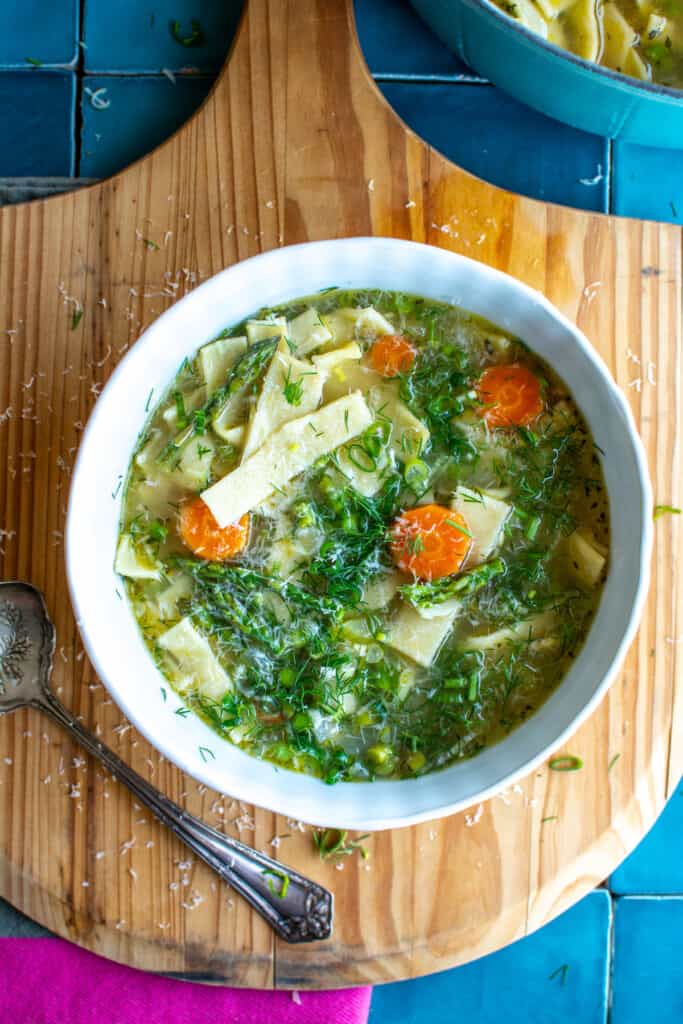
Hi friends! I’m so excited to share this egg noodle soup recipe with you. Handmade egg noodles are a lovely thing all on their own. Cooked until tender in boiling salty water, they need little more than a pat of butter and maybe some chopped fresh herbs if you want to be fancy.
They require a little elbow grease, and a lot of time, but no complicated techniques and can turn a simple vegetable soup into something very special indeed. If you’ve never made noodles from scratch, it is a soothing practice that is very hard to mess up. But I don’t recommend tackling this project on a busy weeknight. Save it for a rainy spring Saturday when you need to turn your mind off and just knead some dough for a while.
If you are in the mood for soups that are not a project, I recommend this easy Beef Barley Soup or soul-warming Pasta Fagioli. It’s good to have options.
Ingredients

- All-purpose flour -The base for tender, structured noodles.
- Large eggs – Bind the dough and give noodles richness and golden color.
- Kosher salt + black pepper – Our flavor foundation. Swap with table salt if needed (use slightly less).
- Olive oil – I suggest you use California Ranch Extra Virgin Olive Oil because it is fresher than imported olive oils.
- Large Onion – Yellow or white onions are ideal; shallots or a small leek work too.
- Garlic – Adds savory depth; fresh is brighter, jarred works in a pinch.
- Carrots + celery – Classic base for sweetness and balance.
- Low-sodium chicken broth. You can substitute vegetable broth or beef broth here if you’d like. If you have homemade chicken stock, even better.
- Bay leaves + Fresh thyme -Flavor backbone of this vegetable noodle soup.
- Asparagus + English peas – Bring freshness, color, and a light spring flavor.
- Fresh dill + Scallions – Green onions add a bright, fresh finish; parsley or chives work too.
- Parmesan, optional. Leave it out if keeping dairy-free.
How To Make It
step one
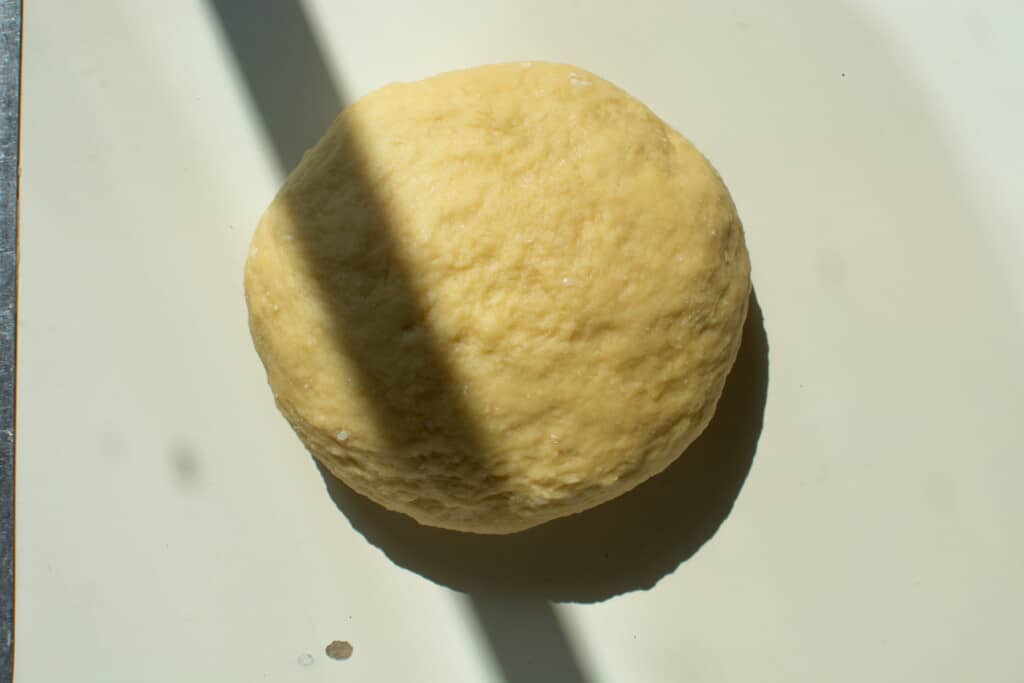
Make the dough. Combine flour and salt in a large bowl. Make a well in the center then add the beaten eggs. Mix in the flour from the sides a little at a time with a fork until a mass too thick to stir with the fork forms.
Dump everything on a clean work surface, sprinkle a little bit of the extra flour on the surface and the dough and push the extra flour off to the side. Knead the dough with your hands, working the extra flour back in, little by little, whenever the dough gets sticky. Once a nice smooth mass has formed, continue kneading for 3 more minutes, adding just enough flour to keep the dough from sticking.
Place the dough in a plastic bag and set aside for at least 30 minutes or up to 3 hours.
step two
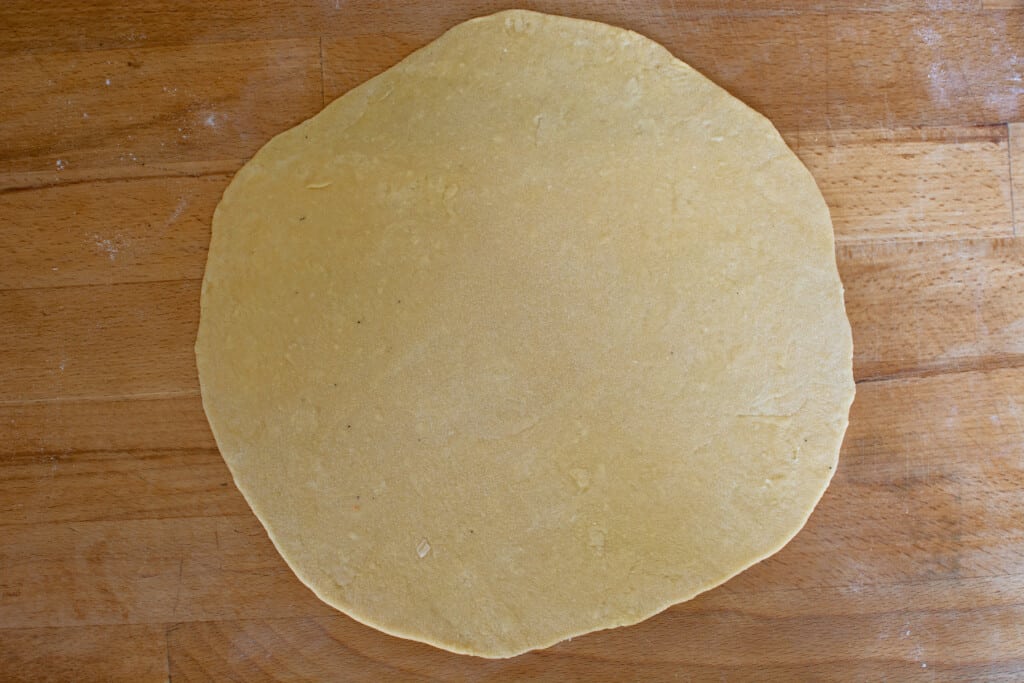
Roll the dough. Divide the dough into 4 equal pieces. Return 3 pieces back to the bag and leave one out. Roll the one piece on a lightly-floured surface until it is 1/4-inch to 1/8-inch thick.
step three
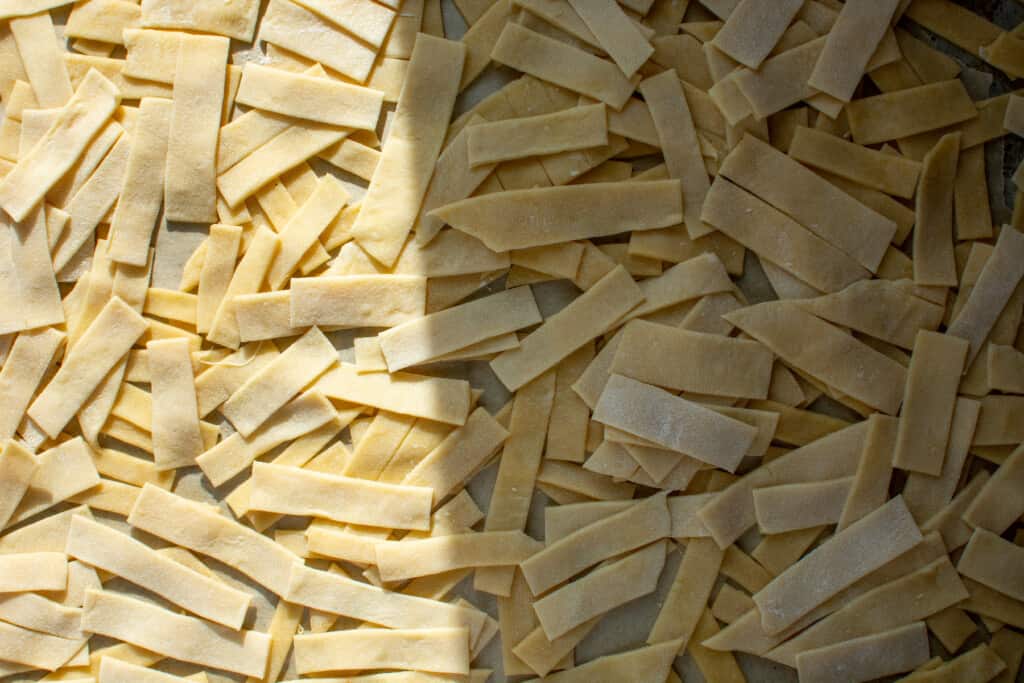
Cut the dough. Using a knife, cut the dough into 1/2-inch by 2-inch pieces. I use all the dough, even the rounded parts but if you want perfectly rectangular noodles, trim the edges first.

step four
Dry the noodles. Lay the noodles on a parchment-lined baking sheet. Spread out as much as possible so they have a chance to dry. Repeat with the remaining pieces of dough. You can make the noodles up to 3 hours in advance. Just leave on the counter to dry.
step five
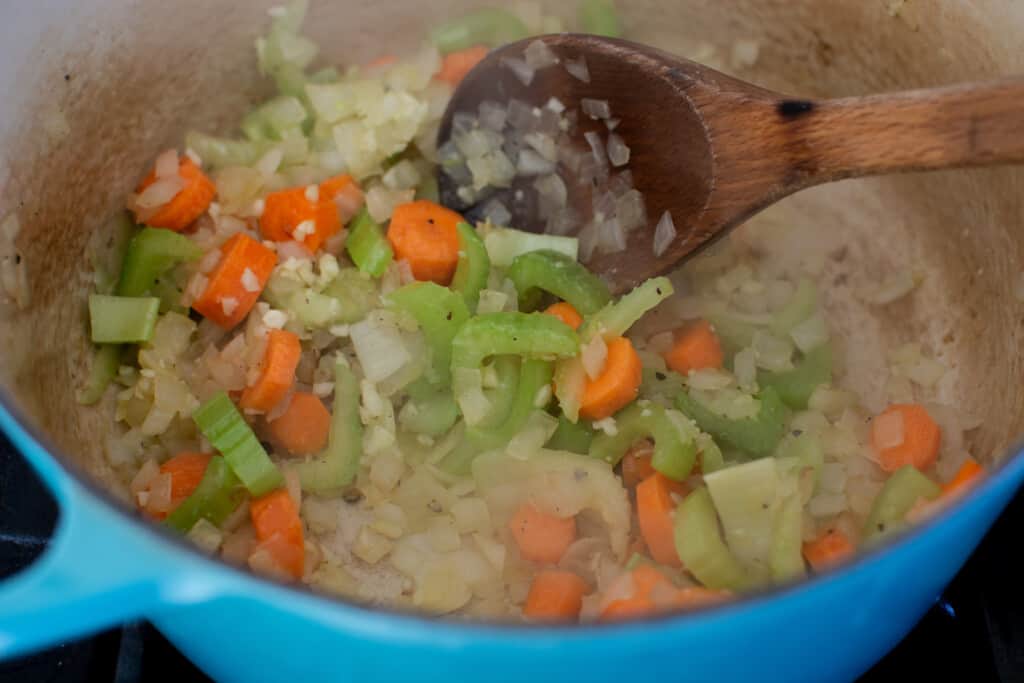
Start the soup. Heat the oil in a large pot or Dutch oven over medium-high heat. Add the onions and season with salt and pepper. Sauté onion, stirring occasionally, until they just start to become translucent.
Add the celery, carrots, and garlic and season again with salt and pepper. Continue cooking until the vegetables just start to soften.
step six
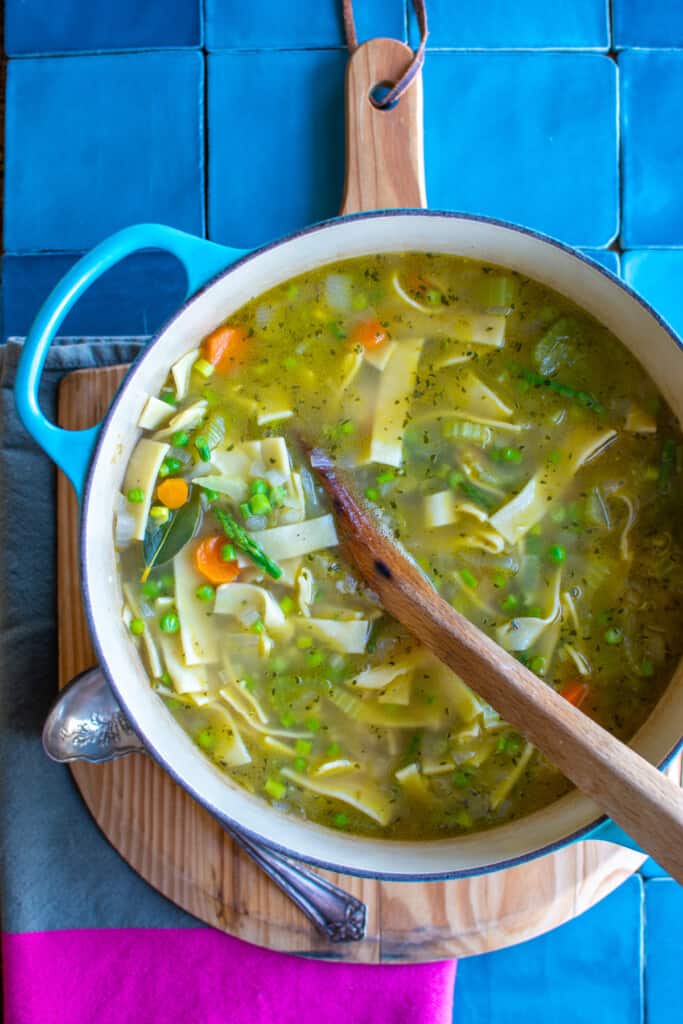
Simmer. Add the broth, bay leaves, thyme, and 2 teaspoons kosher salt and bring to a boil. Reduce the heat to a simmer and cook until the vegetables are just tender, about 20 minutes.

step seven
Cook the noodles. Add the noodles, asparagus, and peas and cook, breaking up the noodles so they don’t stick together. Simmer over medium heat until noodles and vegetables are just tender, about 4 minutes. Don’t cook too long or the noodles will get mushy and the vegetables will loose their color.

step eight
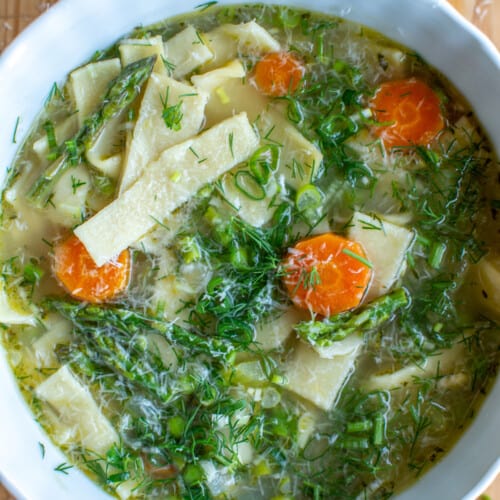
Serve. Taste and season with more salt and pepper if needed. Ladle soup into bowls and top with generous handfuls of chopped dill, scallions, and a sprinkling of parmesan if you’d like. This really is the best soup!

Why This Is The Best Egg Noodle Soup
- Silky, delicate flavor. This soup is gentle and nourishing. Like a little gift of comfort to ourselves.
- Homemade egg noodles. Kind of a no brainer. They really do take this soup from ordinary to extraordinary.
- Adaptable. Like with any good soup recipe, you can really make this your own. Add ginger, lemon juice, a splash of soy sauce, sesame oil, fresh parsley, chicken breasts, your favorite fresh veggies. However you want to spin it, it will be delicious.
Making It Ahead?
Cook the noodles separately in hot water and add them to individual bowls when ready to serve. This keeps your noodles from soaking up excess water or broth, which can make them mushy.
And here’s a little Kate tip: don’t skip adding a generous pinch of salt to the water before cooking the noodles—whether you’re using rice noodles, gluten-free noodles, or traditional egg noodles.
If you’re prepping for the week, store leftover soup and any cooked noodles in separate airtight containers—this keeps everything fresh and ready for a quick lunch or cold weather dinner.
Egg Noodle Soup FAQ’s
How do I make fatter noodles? This recipe makes thin, ribbon-like noodles but if you want fatter, chewier noodles don’t roll the dough as thin.
My dough is dry and hard to roll out. Use as little as flour as possible with kneading and rolling the dough. Just enough so the noodles are not sticky. A wetter dough is a better dough.
Can I use store-bought noodles instead? Of course, use the noodles of your choice. My favorite store-bought brand of egg noodles is Reams egg noodles that can be found in the frozen food section. Otherwise, these dried egg noodles are good.
My soup tastes kind of blah. Well then you didn’t add enough salt. I have a measured amount of salt in this recipe but I encourage you to add more to the finished soup if it doesn’t taste extraordinary. You may even end up adding as much as 1 tablespoon of extra salt depending on your tastes. It’s okay, give the soup what it needs.
How do I make homemade chicken noodle soup? To turn this into chicken soup, add shredded rotisserie chicken (about 2 cups) or dice boneless, skinless chicken breast or thighs and add them with the carrots and celery.
More Soup Recipes You’ll Love
- Easy Beef and Barley Soup
- Tomato and Rice Soup with Dill
- Split Pea and Ham Soup
- Faux Pho Bo (short rib pho)
- The Best Pasta Fagioli
- Mushroom and Barley Soup
- Chicken and Smoked Sausage Gumbo
Make Your Own Egg Noodles
Go on, you deserve it! When you try it, let me know how it went! Share a photo and tag me on Instagram using @katesbestrecipes so that I can see (don’t forget to leave a ⭐️⭐️⭐️⭐️⭐️ rating)! Also, sign up for my weekly recipe newsletter so you never miss a thing.
Homemade Egg Noodle and Spring Vegetable Soup
Ingredients
- 1 1/2 cups all-purpose flour, plus more for dusting
- 1 tablespoon kosher salt, divided (plus more for seasoning)
- 3 large eggs, beaten
- 3 tablespoons olive oil
- 1 large yellow onion, chopped
- 1/2 teaspoon ground black pepper
- 4 cloves garlic, chopped
- 2 medium carrots, sliced
- 2 stalks celery, sliced
- 2 quarts low-sodium broth vegetable, chicken, or beef
- 2 bay leaves
- 2 tablespoons chopped fresh thyme leaves
- 1 cup fresh or frozen English peas
- 1 cup chopped fresh asparagus
- 1/4 cup chopped dill leaves
- 1/4 cup chopped scallions
- Freshly grated Parmesan, for serving
Instructions
- Combine 1 1/2 cups flour and 1 teaspoon of the salt in a large bowl. Make a well in the center and add 3 beaten eggs. Slowly incorporate flour into eggs from the sides of the well with a fork until a thick enough mass forms that you can dump the remaining loose flour and dough onto a clean work surface.
- Push loose flour to one side of the counter and continue kneading the dough until it feels soft and elastic adding back the extra flour from the bowl when it starts getting sticky. Try not to add extra flour if possible. Once a smooth dough forms, knead for 3 minutes more. Place dough in a plastic bag and let rest at least 30 minutes or up to 3 hours.
- Divide dough into 4 equal pieces. Leave one piece out and return the rest to the plastic bag. Using the least amount of flour possible, roll out the dough, stretching and turning as you go, until it is 1/8-inch thick.
- With a knife, cut pasta sheets into 1/2-inch wide-by-2-inch long strips. I also use the rounded end pieces but you could cut them off if you want perfectly rectangular noodles. Place strips in a on a parchment-lined baking sheet in as thin of a layer as possible and set aside. Repeat with remaining pieces of dough. The noodles can be made up to 3 hours in advance, leave uncovered at room temperature to dry.
- Heat 3 tablespoons of olive oil in a large soup pot over medium-high heat. Add 1 diced onion and season with salt and pepper. Cook, stirring occasionally, until onions start to become tender. Add 4 cloves choppedd garlic, 2 sliced carrots, and 2 stalks sliced celery and seasons again with salt and pepper. Cook until vegetables just start to become tender.
- Add 2 quarts broth, 2 tablespoons chopped thyme, remaining 2 teaspoons of salt, and 2 bay leaves. Bring to a boil over medium-high heat, then reduce to a simmer. Cook 20 minutes until vegetables are tender.
- Add noodles, 1 cup chopped asparagus, and 1 cup peas and stir to break-up any noodles that might be stuck together. Simmer until noodles are tender, but not mushy, about 4 to 5 minutes more. Taste and add more salt and pepper if necessary.
- Serve with a generous sprinkling of dill, scallions, and parmesan cheese on top of each bowl.
Notes
-
Broth matters: Use a broth you actually like the taste of—this soup is simple, so the broth flavor really shows. Low-sodium is great, but you’ll likely need to salt in layers.
-
Prevent clumping: Lay cut noodles in a single layer to dry. When you add them to the pot, stir right away to separate any pieces that want to stick together.
-
Add a little richness (optional): Stir in a knob of butter at the end, or finish each bowl with olive oil + Parmesan for a more “restaurant” finish.
-
Herb swaps: Dill + scallions make it taste like spring. If you don’t have dill, try parsley + lemon zest. If you don’t have fresh thyme, use 1–1 1/2 teaspoons dried.